
Dhamma…Nature
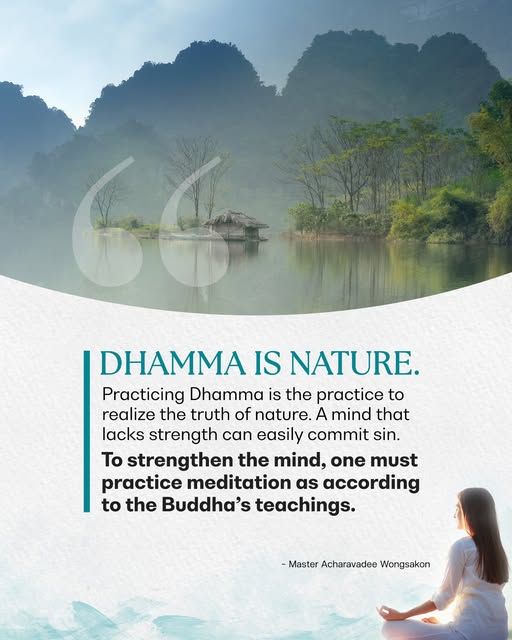
The word “Dhamma,” when translated literally, is Nature.
Practicing Dhamma is the practice to realize the truth of nature. It is the path to goodness, righteousness, and appropriateness.
A noble human being is one who possesses humanity and virtue—a person who preserves the Five Precepts (Sīla).
Sīla means normality which is a way of conduct that is natural for a noble person.
The reason that followers of Buddhism struggle to uphold the Five Precepts is because their minds lack strength and firmness in overcoming their inner Impurities.
What are Impurities (Kilesa)?
They are greed, anger, and delusion—the dark forces within the mind that lead to mental distress.
A mind that lacks strength becomes easily swayed by cravings and desires, unable to resist the deeply imprinted Impurities and become enslaved by them.
Giving alms or reading Dhamma books brings temporary joy, but when faced with real challenges, one may still waver and commit sin.
How can we strengthen the mind?
It can be done by practicing meditation.
Meditation follows the Buddha’s teachings and cultivates the power of the mind, making the mind strong so that it can resist wrongdoing and drive one toward true success, built upon virtue. This is sustainable success that brings lasting peace.
Moreover, meditation has the power to help relieve depression, a prevalent issue in today’s world.
Beyond that, meditation serves as an intermediate level of Dhamma practice, laying the foundation for advanced practice, Vipassana (Insight Meditation). This profound practice can liberate the mind from the cycle of birth, aging, sickness, and death, known as Samsara.
Master Acharavadee Wongsakon